Monday, 4 August 2014

1960-1969 SEASON SUMMARIES NOW AVAILABLE

After 12 years of development and refinement from its 2002 inception, my Rating System is being published. I have started with the Formula One era, 1950-2013, and divided it into decades for practical purposes.  Each ten-year period will be published separately. The fourth decade (1960-1969) is now available – see ‘Buy my Rating System’ above or click on the link below:

The sixth book contains the 1960-1969 seasons, is 82 pages, soft-cover bound and available now online here.


The fifth book contains the 1970-1979 seasons, is 90 pages, soft-cover bound and available now online here.


The fourth book contains the 1980-1989 seasons, is 81 pages, soft-cover bound and is available online here.


The third book contains the 1990-1999 seasons, is 80 pages, soft-cover bound and available online here.


The second book contains the 2010-2013 seasons, is 50 pages, soft-cover bound and available now online here.


The first book contains the 2000-2009 seasons, is 80 pages, soft-cover bound and available now online here.


A section entitled ‘Guidelines for interpreting my Rating System’ is included in all books which briefly explains my System.

Each season is in three sections, Package, Driver and Car, with the whole field rated and tabulated, and text discussing mainly the winners and the front-runners. My own illustrations are used, and reflect a spread of competitors for each season.

For those who are interested further, additional explanations can be found here:


***


Sunday, 29 June 2014

1970-1979 SEASON SUMMARIES NOW AVAILABLE

After 12 years of development and refinement from its 2002 inception, my Rating System is being published. I have started with the Formula One era, 1950-2013, and divided it into decades for practical purposes.  Each ten-year period will be published separately. The third decade (1970-1979) is now available – see ‘Buy my Rating System’ above or click on the link below:

The fifth book contains the 1970-1979 seasons, is 90 pages, soft-cover bound and available now online here.


The fourth book contains the 1980-1989 seasons, is 81 pages, soft-cover bound and is available online here.


The third book contains the 1990-1999 seasons, is 80 pages, soft-cover bound and available online here.


The second book contains the 2010-2013 seasons, is 50 pages, soft-cover bound and available now online here.


The first book contains the 2000-2009 seasons, is 80 pages, soft-cover bound and available now online here.


A section entitled ‘Guidelines for interpreting my Rating System’ is included in both books which briefly explains my System.

Each season is in three sections, Package, Driver and Car, with the whole field rated and tabulated, and text discussing mainly the winners and the front-runners. My own illustrations are used, and do not necessarily show the fastest, top ranked competitors, but rather a spread for each season.

For those who are interested further, additional explanations can be found here:


***

Tuesday, 17 June 2014

FORMULA ONE DRIVERS AND SPEED COMPARISONS: 1950-2013

ONLY PEAK: Farina 1950
If one were to list the World Driver Champions, and then compare with a list of those drivers considered ‘great’ there would be quite a few differences. One glaring example would be that Moss did not score a World Drivers Championship. If another list were made with those drivers considered the ‘fastest’, there would again be some differences. One would be that two drivers who were really fast, Gilles Villeneuve and Peterson, do not appear on the Driver Champions list. Yet another list ranking by Drivers Championship points scored would not tally with the other listings. Nor would a list of race-winners match.

All this points to the fact that Formula One racing is too complex a sport to easily analyse, rate, rank and compare drivers. The car is such a crucial factor in determining performance. After years of trying various comparative methods, I devised my Rating System in 2002. This is based on speed comparisons between drivers, the car having been ‘removed’ from the equation. Explanations of my Rating System methodology can be read elsewhere on this blog and in my recent publications.

FIRST PEAK: Ascari 1951
Throughout Grand Prix racing history one reads of certain driver characteristics: such as being very sensitive to car behaviour (Trulli 1997-2010 and Raikkonen 2010-2013), some having ‘soft hands’ (1905-1922) Fiat driver Nazzaro), others able to conserve tyres and fuel (Prost 1980-1993 and Button 2001-2014), some able to coax ailing cars to the finish (Clark 1960-1968 and Fittipaldi 1970-1980). Alfa Romeo chief mechanic (1918-1933) Giulio Ramponi told how gentle Antonio Ascari (twenties) and Nuvolari (thirties) were on their cars, tyres and brakes. Brabham’s chief designer (1973-1985) Gordon Murray said in 1983 that Piquet used less fuel and rubber than his team-mate Patrese. Today in 2014 we see that Hamilton uses less fuel than his Mercedes-Benz team-mate Nico Rosberg. These are distinguishing aspects of driving style.

SPEED
Above all such nuances, the over-riding factor is speed. All the great drivers won because of their superior speed. Speed in comparison to rivals and team-mates. As Eddie Irvine said of Michael Schumacher, his Ferrari team-mate (1996-1999): “He was quick and everything else came from that.” In the 1932 Targa Florio (8 laps of 71 km/miles each on rough, unsurfaced roads, for a race distance 571 km/355 miles and 7-hours 16-minutes duration) Alfa Romeo’s Ramponi told how Nuvolari used the same set of brakes for practice, race-led all the way to win, and that he was much faster than his second-placed team-mate Borzzachini, who used four sets! Reading of those ‘thinking’ great drivers Nazzaro, Caracciola, Fangio, Stewart and Prost ‘winning at the slowest possible speed’ gives the impression that they were cautious and perhaps not the fastest. Far from it; it was only because of their superior racing speed that they were, on occasion, able to slow down and win.

FIRST PEAK: Brabham 1959
Unlike the many popular ‘Greatest/Top 100/Fastest’ driver lists published by well-known authors, journals or compiled by panels of experts, I do not rank drivers lineally. Drivers from different eras cannot be directly compared. Rather I rank drivers in layers or tiers. This is based purely on their speed compared with the fastest driver of each season, as calculated by my Rating System (explained in more detail elsewhere on this blog and in my recent publications). Shown below are the drivers and the season that they first achieved their peak rating. Bear in mind these tiers are based purely on driver speeds; excluded are the package (car-and-driver), car, race results or official championship titles, points and places.

TIER ONE (16 drivers)
Fangio 1950, Ascari 1951, Moss 1956, Surtees 1961, Clark 1963, Stewart 1968, Lauda 1975, Villeneuve G 1981, Piquet snr 1982, Prost 1983, Senna 1986, Schumacher M 1995, Raikkonen 2005, Alonso 2005, Hamilton 2008, Vettel 2011.

Few could argue with these sixteen, who dominated or were considered to have been the fastest of their eras. All scored multiple wins and, except for two (Moss and Gilles Villeneuve), won at least one Drivers Championship. Surtees won only six races due to not having a fast-enough car for most of his career, somewhat like Alonso from 2008-2013.

TIER TWO (8 drivers)
Rindt 1970, Andretti Mario 1970, Peterson 1973, Reutemann 1978, Berger 1989, Hakkinen 1998, Schumacher R 2004, Montoya 2004.

Perhaps it is curious that so few drivers managed to come so close to the ultimate speed? Two examples were Rindt and Peterson, both exceptionally fast, but just shaded by the dominant driver of their era, Jackie Stewart. Berger is perhaps a surprise, but when up against his Ferrari team-mate Mansell at his peak in 1989, Berger was not outperformed for speed despite his huge crash and hand-burns at Imola. Ralf Schumacher has been overlooked partly because of his introverted personality. He really was very fast, outperforming or close-matching his more renowned and acknowledged Williams-BMW team-mate Montoya over four seasons (2001-2004).

TIER THREE (13 drivers)
Castellotti 1957, Brooks 1958, Amon 1970, Ickx 1971, Cevert 1973, Regazzoni 1976, Pironi 1982, Mansell 1988, Coulthard 1997, Barrichello 2002, Massa 2007, Button 2010, Kubica 2010, Rosberg N 2012.

The unacknowledged Eugenio Castellotti I compared directly against his famous Lancia team-leader Ascari for 1955 and then for 1956-7 against his much-publicised Ferrari team-mates Hawthorn and Collins. I found his performances to have been superior to Hawthorn's and Collins's, based purely on comparative track times. A separate post on this blog reveals in detail Castellotti’s pace and speed. Many will doubt Massa’s inclusion in this group, but in 2007 he matched Alonso, Hamilton and Raikkonen for speed when all had equally-matched cars, neither McLaren-Mercedes nor Ferrari displaying any car superiority. For those who doubted the de-retired Michael Schumacher’s pace from 2010-2012 and consequently Nico Rosberg’s, in 2013 Rosberg close-matched Hamilton for speed, and so far in 2014 has confirmed he is fast by racing so close to Hamilton.

ONLY PEAK: Rindt 1970
TIER FOUR (16 drivers)
Farina 1950, Villoresi 1950, Hunt 1976, Pace 1976, Arnoux 1982, Cheever 1983,Tambay 1983, Winkelhok Manfred 1984, Rosberg K 1985, Frentzen 1999, Trulli 2003, Fisichella 2005, Kovalainen 2008, Webber 2010, Grosjean 2012, Hulkenberg 2013.

Veterans Farina and Villoresi in their forties did well to be so fast when they faced the younger Fangio and Ascari. The cases of Cheever, Fisichella, Kovalainen and Grosjean could partly be ascribed to having top-rated team-mates, Prost, Alonso, Hamilton and Raikkonen respectively, in top-rate teams.

TIER FIVE (14 drivers)
Hawthorn 1958, Gurney 1964, Pryce 1976, Scheckter J 1977, Stuck H-J 1978, Jones 1979, Patrese 1982, Warwick 1984, Martini 1990, Modena 1991, Irvine 1999, Wurz 2008, Heidfeld 2007.

Of this Tier or group Martini and Modena showed instant speed, but neither had fast enough cars to improve further. Driver Champions Hawthorn, Scheckter and Jones, although some way off ultimate pace, were tough, experienced racers. Irvine came close to the Title but rival McLaren-Mercedes drivers Hakkinen and Coulthard and Ferrari team-mate Schumacher were just too fast for him.

TIER SIX (33 drivers)
Manzon 1950, Galvez 1953, Rolt 1953, Crook 1953, Collins 1957, Musso 1958, Brabham 1959, Menditeguy 1960, Von Trips 1960, Hill G 1962, Scarfiotti 1966, Hulme 1968, Redman 1971, Fittipaldi E 1972, Depailler 1977, Laffite 1979, Jabouille 1980, Watson 1981, Alboreto 1983, Boutsen 1990, Donnelly 1990, Alesi 1991, Hill D 1996, Herbert 1996, Villeneuve J 1997, Verstappen 2003, Davidson 2008, Piquet jnr 2008, Kobayashi 2011, di Resta 2012, Petrov 2012, Glock 2012, Maldonado 2013.

It was this Tier Six that I have found to generally be the slowest driver-rating limit for scoring wins and more success. Drivers any slower or further from the front only scored one or two wins. Many may question my inclusion of Nelson Piquet jnr here; however I have measured him directly against one of the two top drivers of the season, Renault team-mate Alonso. Piquet was found to be impressively fast for a rookie, despite having hardly any testing time.

FIRST PEAK: Alonso 2005 and Vettel 2011
FAST ENOUGH CAR ESSENTIAL
As explained elsewhere in this blog, my measurement and calculation of driver speeds do not necessarily coincide with nor are they based on race results or official championship points or places. A driver has to have a car fast enough to show his speed in race results. Even the fastest drivers almost always had the fastest cars when dominating. Prime example of a top-rated driver whose race results obscured his driver-speed is Surtees. He raced for 13 years (1960-1972) yet scored only six wins. This was because he enjoyed a top-rated car for only the four races in his rookie part-season 1960, and again for just the first two races of 1966. For the rest of his career Surtees drove off-pace cars. Consequently his talent, skill and hard work did not show in bare results. Race results form strong perceptions. Such that top cars can make lesser drivers appear superior and slower cars can damage a driver’s reputation, as we are seeing with the talented and fast Romain Grosjean in 2014.

DIRECT COMPARISONS?
Each driver’s speed I have listed above here was measured and scored on my Rating System within each particular season, and calculated as season-averages, using the fastest as the benchmark. Therefore it is not possible to directly compare top-rated Fangio in 1950-1954 with top-rated Alonso in 2008-2013, other than to say that each achieved the ultimate speed of his respective season/s. My Rating System does show the time gap that each driver raced from the fastest. For example one could not say that Manzon in 1950 and Maldonado in 2013 were equal in speed, only that they raced at the same gap from the fastest driver/s of their day. The ‘tiers’ or groupings above do not mean the drivers within each are equal, just that they raced at the same gap from the fastest of their day. Unless of course a group includes two or more drivers from the same season/s, in which case they can be considered equal in speed. In the six tiers above, I have presented several pairs of drivers who equal-speed-rated in the same season.

The 101 drivers listed here comprise most of the Formula One race winners from 1950 to 2013, ranked in groups or tiers according to their speed from the fastest each season.


© Patrick O’Brien. Nothing from this page can be used without the permission of Patrick E. O’Brien.

***

Friday, 25 April 2014

1980-1989 SEASON SUMMARIES NOW AVAILABLE

After 12 years of development and refinement from its 2002 inception, my Rating System is being published. I have started with the Formula One era, 1950-2013, and divided it into decades for practical purposes.  Each ten-year period will be published separately. The seventh decade (2010-2013) is now available – see ‘Buy my Rating System’ above or click on the link below:

The fourth book contains the 1980-1989 seasons, is 81 pages, soft-cover bound
and available now online here.


The third book contains the 1990-1999 seasons, is 80 pages, soft-cover bound and available online here.


The second book contains the 2010-2013 seasons, is 50 pages, soft-cover bound and available now online here.


The first book contains the 2000-2009 seasons, is 80 pages, soft-cover bound and available now online here.


A section entitled ‘Guidelines for interpreting my Rating System’ is included in both books which briefly explains my System.

Each season is in three sections, Package, Driver and Car, with the whole field rated and tabulated, and text discussing mainly the winners and the front-runners. My own illustrations are used, and do not necessarily show the fastest, top ranked competitors, but rather a spread for each season. 

For those who are interested further, additional explanations can be found here:


***

Wednesday, 23 April 2014

1990-1999 SEASON SUMMARIES NOW AVAILABLE

After 12 years of development and refinement from its 2002 inception, my Rating System is being published. I have started with the Formula One era, 1950-2013, and divided it into decades for practical purposes.  Each ten-year period will be published separately. The Nineties is now available – see ‘Buy my Rating System’ above or click on the link below:

The third book contains the 1990-1999 seasons, is 80 pages, soft-cover bound and available now online here.


The second book contains the 2010-2013 seasons, is 50 pages, soft-cover bound and available online here.


The first book contains the 2000-2009 seasons, is 80 pages, soft-cover bound and available online here.


A section entitled ‘Guidelines for interpreting my Rating System’ is included in both books which briefly explains my System.

Each season is in three sections, Package, Driver and Car, with the whole field rated and tabulated, and text discussing mainly the winners and the front-runners. My own illustrations are used, and do not necessarily show the fastest, top ranked competitors, but rather a spread for each season. 

For those who are interested further, additional explanations can be found here:


***

Tuesday, 4 February 2014

2010-2013 SEASON SUMMARIES NOW AVAILABLE

After 12 years of development and refinement from its 2002 inception, my Rating System is being published. I have started with the Formula One era, 1950-2013, and divided it into decades for practical purposes. 

Each ten-year period will be published separately. The seventh decade (2010-2013) is now available – see ‘Buy my Rating System’ above or click on the link below:

The second book contains the 2010-2013 seasons, is 50 pages, soft-cover bound and available now online here:

The first book contains the 2000-2009 seasons, is 80 pages, soft-cover bound and available now online here:


A section entitled ‘Guidelines for interpreting my Rating System’ is included in both books which briefly explains my System.

Each season is in three sections, Package, Driver and Car, with the whole field rated and tabulated, and text discussing mainly the winners and the front-runners. My own illustrations are used, and do not necessarily show the fastest, top ranked competitors, but rather a spread for each season. 

For those who are interested further, additional explanations can be found here:


***


Friday, 31 January 2014

CAN GREAT DRIVERS BE IDENTIFIED IN THEIR ROOKIE SEASON?

The story of how fast Michael Schumacher was on his debut race for Jordan-Cosworth in the 1991 Belgian GP at Spa is well-known. Instant and exceptional speed. The same went for Ayrton Senna for Toleman-Hart in 1984. These two future top-raters and champions were noticeably faster than their team-mates. They were obviously special. Lewis Hamilton debuted for McLaren-Mercedes in 2007 and performed at the same level as his established, twice-World Champion team-mate, Fernando Alonso, who was into his sixth season.
Senna 1984
Schumacher 1991
Vettel 2007

I collated the debut season driver-ratings as scored on my Rating System to determine how often this ‘instantly-fast’ rookie phenomenon occurred. My 1894-2013 spreadsheet and season tables showed that the majority of star-drivers shone in their first season.


'SAMPLE SIZE'

First I highlighted in my season tables those drivers who attained the ultimate driver rating of 100.0 or attained the highest rating in that season/era. I then went back to their rookie season to see what their rating was then. There were 48 ‘star drivers’ from 1894-2013, as decided by their racing achievements and acknowledged greatness and by my Rating System (which measures them throughout their career, not only their rookie season). Thirty-two of 48 great drivers (67%) started within the 100.5 to 100.8 bracket; 16 of the 48 (33%) were faster (between 100.0 and 100.4), and only one, Lauda, was much slower than all here (for example, in his first full season, in 1972, he driver-rated at 101.6).


METHODOLOGY

My workings and calculation method were not done retrospectively. Each season was treated in isolation; the drivers were measured and scored against their team-mates and peer rivals within each season. Of course, my driver selection now is done retrospectively with hindsight, knowing who the great drivers have been.

My rookie-season driver-rating stats have been surprisingly even over the 120 years of grand prix racing history from 1894 to 2013.


Caracciola 1926
Chiron 1927
Rosemeyer 1935

Bear in mind that the fastest, benchmark driver-rating is 100.0 on my System, and that 100.1 is 0.1% slower, 100.2 is 0.2% slower, 101.0 is 1.0% slower and so on. For 2013, my Rating System scored Alonso and Vettel equal top-rated at 100.0. Some Champion Drivers did not rate at the ultimate 100.0, such as Damon Hill, Jacques Villeneuve who at their peaks scored 100.5. Jack Brabham, Graham Hill and Emerson Fittipaldi also peak driver-rated at 100.5. Hawthorn, Scheckter and Jones peaked at 100.4. Hunt’s best was 100.3, while Mansell and Button peak driver-rated at 100.2, Hakkinen at 100.1. My System measures and scores drivers based on comparative speeds only, and takes no account whatsoever of the official championships, points or placings.

ROOKIE DRIVER-RATINGS FROM THE FORMULA ONE ERA (1950-2013)

Taking the greatest drivers of the Formula One era, 1950-2013, who debuted at similar driver-rating figures by my System:

· Alberto Ascari debuted in 1940 in a privately-owned Maserati to driver-rate at 100.7.
· Fangio’s first major Grand Prix appearance was at age 36 in 1948 driving for Gordini-Simca when he driver-rated at 100.7.
· Moss started aged 21 in 1951 to driver-rate at 101.0, but he only appeared twice; he then rated at 100.8 in 1952 when he competed more often.
· Hawthorn rated at 100.8 in 1952 when he drove a well-prepared Cooper-Bristol.
· Surtees scored 100.7 in 1960 driving a Lotus-Climax for just four races.
· Stewart started at 100.8 when debuting as team-mate to the experienced and competitive Graham Hill for BRM in 1965.
· Andretti on his first appearance equalled Lotus-Cosworth team-mate and twice-World Champion Graham Hill in 1968, to rate at 100.5.
· Gilles Villeneuve only raced once in 1977, but for his first full season with Ferrari in 1978 scored 100.8.
· Prost famously outpaced his fast and experienced McLaren-Cosworth team-mate Watson on his debut in 1980, rating at 100.5.
· Senna scored 100.7 in his debut season for Toleman-Hart in1984.
· Schumacher driver-rated at 100.8 in 1991 for Eddie Jordan’s new Jordan-Cosworth team.
· Hakkinen driver-rated at 100.7 for Lotus-Cosworth in 1992.
· Raikkonen driver-rated at 100.7 debuting for the Sauber-Ferrari team in 2001. He was slightly faster than his promising and more experienced team-mate Heidfeld in 2001.
· Alonso shone at 100.7 at the same driver-rating as Raikkonen. This despite driving a slow, backmarker Minardi-Cosworth in 2001.
· Hamilton amazed everyone at his 2007 debut by equal-rating at 100.2 with his illustrious McLaren-Mercedes team-mate Alonso. He was probably the best-prepared F1 driver, having been coached and supported by the McLaren team since his teenage years and spent many pre-season hours in the simulator. An exceptional performance.
· Vettel was first noticed by the media when he won the wet 2008 Italian GP for Toro Rosso-Ferrari. However my System driver-rated him a season earlier in 2007 at 100.7. This was despite him driving only the last seven races of the season.

These are 16 of the greatest Formula One drivers, all of whom went on to top, driver-rate and /or score World Championships. At the time many others driver-rated at about the same figures of 100.5 to 100.8, but none were rookies.

Clark 1960
Lauda 1971
Piquet 1978

The only other really great F1 drivers who do not appear on the above list are Clark, Lauda and Piquet. This is because their rookie-season driver-ratings were slower than the 100.5-100.8 range that is the norm for great drivers in their rookie seasons. Below I offer some possible explanations for these three surprising cases.

To compile the above list, I was working strictly to a narrow range of driver-ratings (of 100.5-100.8, as derived from the data) as scored on my tables and spreadsheet to within one-hundredths of a second differences. That is why these three were left out.

There are however explanations for two of these outliers which show that they did in fact conform to the fast-starting rookie driver-ratings.

· Clark debuted at a driver-rating of 101.0 for his six of nine appearances in 1960. He drove part-time for Lotus-Climax. Clark was occasionally cautious (or sensible) as a person, and was up against three faster and more experienced drivers in same cars for 1960: Moss, Surtees and Ireland. The next year 1961 Clark raced at 100.5.

· Lauda debuted in 1971 for just one race in an ill-prepared March-Cosworth and driver-rated at a very slow 104.9! He improved in 1972 after a full season with the March team to driver-rate at 101.6. Still no sign of greatness. In 1973, for BRM, Lauda’ technical and applicational skills started to show as he scored 100.7. This was a uniquely slow start for one who was to join the greats!

· Piquet raced just four times in 1978, three in an old-model McLaren-Cosworth and once in a Brabham-Alfa Romeo, to driver-rate at 101.8. In 1979 Piquet drove full-time for Brabham and driver-rated at the future-star ‘norm’ of 100.7.

None of these ratings was calculated or compared against drivers of other eras, nor against each other. I scored each season-by-season against their peers. Yet the results have been amazingly similar; including Clark and Piquet, 14 of the 16 debutants scored between 100.5 and 100.8.

This is a surprisingly close range considering the differences in fields, cars, technologies, races and formats over the 64 Formula One seasons.

The spread of 0.3% represents 0.3-second in a qualifying lap or 18-seconds in a 60-lap race of 100-minutes. Additionally these drivers were usually not front-runners and raced further back, some in the midfield.

What accounts for this level of accuracy is that my System measures and scores each driver against the fastest driver of each season, i.e., those that top-rate at or close to the stable, benchmark factor of 100.0. Only two of the above-listed 16 stand out in their rookie season performances: Hamilton faster at 100.2 and Lauda much slower.


ROOKIE DRIVER-RATINGS FROM THE PRE-FORMULA ONE ERA (1894-1949)

Going back to Grand Prix beginnings, in 1894, the same 100.5 to 100.8 pattern is found.
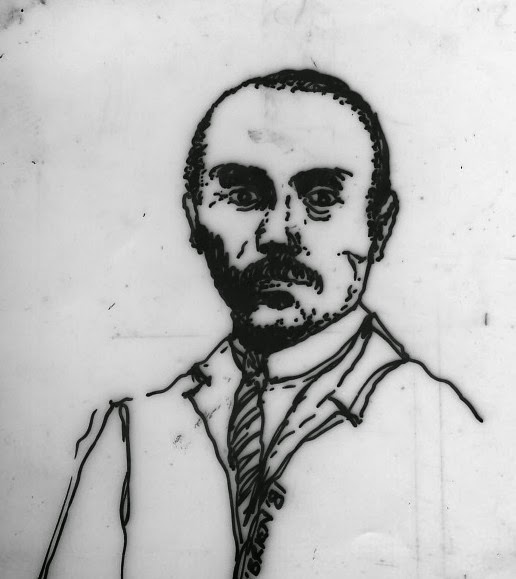
Charron 1898
Fournier 1901
Nazzaro 1904

Among the over 30 instantly-fast rookies are such greats as: Charron 1897, Levegh 1899, Nazzaro 1904,Wishart 1909, Anderson 1911, Andre Boillot 1919, Antonio Ascari1923, Benoist 1924, Caracciola 1926, Chrion1927, Nuvolari 1928 and Rosemeyer 1935. All debuted within this fast and very close 100.5 to 100.8 range.
         
Ralph de Palma 1908
David Bruce-Brown 1901
Antonio Ascari 1923

THE FASTEST DEBUTANT DRIVERS 1894-2013

Hamilton’s debut driver-rating of 100.2 stands out as the fastest among the 16 rookies of the Formula One era 1950-2013. However, in the earlier grand prix era, from 1894-1949, several debut drivers started at even faster rookie driver-ratings than Hamilton did: Henri Fournier in 1901, Théry, Albert Clement and Lancia in 1904, Baras and Salzer in 1906, de Palma in 1908, Sailer in 1914, Bordino in 1921 to Arcangeli in 1930.

Doubtless there are reasons for each, such as prior experience in highly-competitive prior grand prix-type races or classes below Grand Prix level, much as Fangio had done. As well of course as superior talent and aptitude.


SIMILAR DRIVER-RATINGS

The fact that two-thirds of these 48 greatest drivers (67%) started their careers at a similar ‘gap’ from the fastest, established stars demonstrates that my Rating System is more than ‘just personal opinion’. It indicates that this must be a fairly accurate method of driver-rating.


CONCLUSION

QUESTION:

mds wrote:

Patrick, as always, a great read and valuable information. Thank you for that.

However I don't think the starting question is answered in your blog post. The question that is being answered is more "Were the greats also fast as a rookie?". It takes the later periods of driver ratings as a starting point, then looks back at their starting seasons. To really answer the question "Can future stars be identified?" a correlation could be made starting from the rookie rating of each driver, and then go on to see if the fastest go on to become stars/greats.

Maybe an idea for a future blog post?

ANSWER:

Thanks MDS and Fiki, you are both right: I did not answer my title question because I can't.

Drivers such as Alesi and J Villeneuve came in at a high performance level, but did not go on to become 'great' or top-rated for various reasons.

What surprised me was the fair consistency of the rookie season driver-ratings for about two-thirds of the 'great' drivers.


© Patrick O’Brien. Nothing from this page can be used without the permission of Patrick E. O’Brien.

***