Friday, 31 January 2014

CAN GREAT DRIVERS BE IDENTIFIED IN THEIR ROOKIE SEASON?

The story of how fast Michael Schumacher was on his debut race for Jordan-Cosworth in the 1991 Belgian GP at Spa is well-known. Instant and exceptional speed. The same went for Ayrton Senna for Toleman-Hart in 1984. These two future top-raters and champions were noticeably faster than their team-mates. They were obviously special. Lewis Hamilton debuted for McLaren-Mercedes in 2007 and performed at the same level as his established, twice-World Champion team-mate, Fernando Alonso, who was into his sixth season.
Senna 1984
Schumacher 1991
Vettel 2007

I collated the debut season driver-ratings as scored on my Rating System to determine how often this ‘instantly-fast’ rookie phenomenon occurred. My 1894-2013 spreadsheet and season tables showed that the majority of star-drivers shone in their first season.


'SAMPLE SIZE'

First I highlighted in my season tables those drivers who attained the ultimate driver rating of 100.0 or attained the highest rating in that season/era. I then went back to their rookie season to see what their rating was then. There were 48 ‘star drivers’ from 1894-2013, as decided by their racing achievements and acknowledged greatness and by my Rating System (which measures them throughout their career, not only their rookie season). Thirty-two of 48 great drivers (67%) started within the 100.5 to 100.8 bracket; 16 of the 48 (33%) were faster (between 100.0 and 100.4), and only one, Lauda, was much slower than all here (for example, in his first full season, in 1972, he driver-rated at 101.6).


METHODOLOGY

My workings and calculation method were not done retrospectively. Each season was treated in isolation; the drivers were measured and scored against their team-mates and peer rivals within each season. Of course, my driver selection now is done retrospectively with hindsight, knowing who the great drivers have been.

My rookie-season driver-rating stats have been surprisingly even over the 120 years of grand prix racing history from 1894 to 2013.


Caracciola 1926
Chiron 1927
Rosemeyer 1935

Bear in mind that the fastest, benchmark driver-rating is 100.0 on my System, and that 100.1 is 0.1% slower, 100.2 is 0.2% slower, 101.0 is 1.0% slower and so on. For 2013, my Rating System scored Alonso and Vettel equal top-rated at 100.0. Some Champion Drivers did not rate at the ultimate 100.0, such as Damon Hill, Jacques Villeneuve who at their peaks scored 100.5. Jack Brabham, Graham Hill and Emerson Fittipaldi also peak driver-rated at 100.5. Hawthorn, Scheckter and Jones peaked at 100.4. Hunt’s best was 100.3, while Mansell and Button peak driver-rated at 100.2, Hakkinen at 100.1. My System measures and scores drivers based on comparative speeds only, and takes no account whatsoever of the official championships, points or placings.

ROOKIE DRIVER-RATINGS FROM THE FORMULA ONE ERA (1950-2013)

Taking the greatest drivers of the Formula One era, 1950-2013, who debuted at similar driver-rating figures by my System:

· Alberto Ascari debuted in 1940 in a privately-owned Maserati to driver-rate at 100.7.
· Fangio’s first major Grand Prix appearance was at age 36 in 1948 driving for Gordini-Simca when he driver-rated at 100.7.
· Moss started aged 21 in 1951 to driver-rate at 101.0, but he only appeared twice; he then rated at 100.8 in 1952 when he competed more often.
· Hawthorn rated at 100.8 in 1952 when he drove a well-prepared Cooper-Bristol.
· Surtees scored 100.7 in 1960 driving a Lotus-Climax for just four races.
· Stewart started at 100.8 when debuting as team-mate to the experienced and competitive Graham Hill for BRM in 1965.
· Andretti on his first appearance equalled Lotus-Cosworth team-mate and twice-World Champion Graham Hill in 1968, to rate at 100.5.
· Gilles Villeneuve only raced once in 1977, but for his first full season with Ferrari in 1978 scored 100.8.
· Prost famously outpaced his fast and experienced McLaren-Cosworth team-mate Watson on his debut in 1980, rating at 100.5.
· Senna scored 100.7 in his debut season for Toleman-Hart in1984.
· Schumacher driver-rated at 100.8 in 1991 for Eddie Jordan’s new Jordan-Cosworth team.
· Hakkinen driver-rated at 100.7 for Lotus-Cosworth in 1992.
· Raikkonen driver-rated at 100.7 debuting for the Sauber-Ferrari team in 2001. He was slightly faster than his promising and more experienced team-mate Heidfeld in 2001.
· Alonso shone at 100.7 at the same driver-rating as Raikkonen. This despite driving a slow, backmarker Minardi-Cosworth in 2001.
· Hamilton amazed everyone at his 2007 debut by equal-rating at 100.2 with his illustrious McLaren-Mercedes team-mate Alonso. He was probably the best-prepared F1 driver, having been coached and supported by the McLaren team since his teenage years and spent many pre-season hours in the simulator. An exceptional performance.
· Vettel was first noticed by the media when he won the wet 2008 Italian GP for Toro Rosso-Ferrari. However my System driver-rated him a season earlier in 2007 at 100.7. This was despite him driving only the last seven races of the season.

These are 16 of the greatest Formula One drivers, all of whom went on to top, driver-rate and /or score World Championships. At the time many others driver-rated at about the same figures of 100.5 to 100.8, but none were rookies.

Clark 1960
Lauda 1971
Piquet 1978

The only other really great F1 drivers who do not appear on the above list are Clark, Lauda and Piquet. This is because their rookie-season driver-ratings were slower than the 100.5-100.8 range that is the norm for great drivers in their rookie seasons. Below I offer some possible explanations for these three surprising cases.

To compile the above list, I was working strictly to a narrow range of driver-ratings (of 100.5-100.8, as derived from the data) as scored on my tables and spreadsheet to within one-hundredths of a second differences. That is why these three were left out.

There are however explanations for two of these outliers which show that they did in fact conform to the fast-starting rookie driver-ratings.

· Clark debuted at a driver-rating of 101.0 for his six of nine appearances in 1960. He drove part-time for Lotus-Climax. Clark was occasionally cautious (or sensible) as a person, and was up against three faster and more experienced drivers in same cars for 1960: Moss, Surtees and Ireland. The next year 1961 Clark raced at 100.5.

· Lauda debuted in 1971 for just one race in an ill-prepared March-Cosworth and driver-rated at a very slow 104.9! He improved in 1972 after a full season with the March team to driver-rate at 101.6. Still no sign of greatness. In 1973, for BRM, Lauda’ technical and applicational skills started to show as he scored 100.7. This was a uniquely slow start for one who was to join the greats!

· Piquet raced just four times in 1978, three in an old-model McLaren-Cosworth and once in a Brabham-Alfa Romeo, to driver-rate at 101.8. In 1979 Piquet drove full-time for Brabham and driver-rated at the future-star ‘norm’ of 100.7.

None of these ratings was calculated or compared against drivers of other eras, nor against each other. I scored each season-by-season against their peers. Yet the results have been amazingly similar; including Clark and Piquet, 14 of the 16 debutants scored between 100.5 and 100.8.

This is a surprisingly close range considering the differences in fields, cars, technologies, races and formats over the 64 Formula One seasons.

The spread of 0.3% represents 0.3-second in a qualifying lap or 18-seconds in a 60-lap race of 100-minutes. Additionally these drivers were usually not front-runners and raced further back, some in the midfield.

What accounts for this level of accuracy is that my System measures and scores each driver against the fastest driver of each season, i.e., those that top-rate at or close to the stable, benchmark factor of 100.0. Only two of the above-listed 16 stand out in their rookie season performances: Hamilton faster at 100.2 and Lauda much slower.


ROOKIE DRIVER-RATINGS FROM THE PRE-FORMULA ONE ERA (1894-1949)

Going back to Grand Prix beginnings, in 1894, the same 100.5 to 100.8 pattern is found.
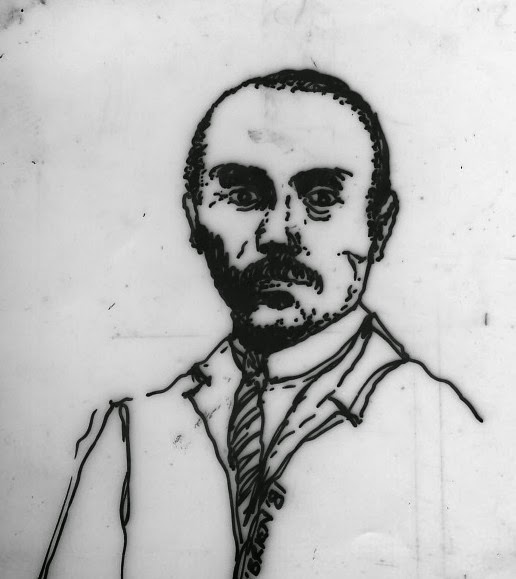
Charron 1898
Fournier 1901
Nazzaro 1904

Among the over 30 instantly-fast rookies are such greats as: Charron 1897, Levegh 1899, Nazzaro 1904,Wishart 1909, Anderson 1911, Andre Boillot 1919, Antonio Ascari1923, Benoist 1924, Caracciola 1926, Chrion1927, Nuvolari 1928 and Rosemeyer 1935. All debuted within this fast and very close 100.5 to 100.8 range.
         
Ralph de Palma 1908
David Bruce-Brown 1901
Antonio Ascari 1923

THE FASTEST DEBUTANT DRIVERS 1894-2013

Hamilton’s debut driver-rating of 100.2 stands out as the fastest among the 16 rookies of the Formula One era 1950-2013. However, in the earlier grand prix era, from 1894-1949, several debut drivers started at even faster rookie driver-ratings than Hamilton did: Henri Fournier in 1901, Théry, Albert Clement and Lancia in 1904, Baras and Salzer in 1906, de Palma in 1908, Sailer in 1914, Bordino in 1921 to Arcangeli in 1930.

Doubtless there are reasons for each, such as prior experience in highly-competitive prior grand prix-type races or classes below Grand Prix level, much as Fangio had done. As well of course as superior talent and aptitude.


SIMILAR DRIVER-RATINGS

The fact that two-thirds of these 48 greatest drivers (67%) started their careers at a similar ‘gap’ from the fastest, established stars demonstrates that my Rating System is more than ‘just personal opinion’. It indicates that this must be a fairly accurate method of driver-rating.


CONCLUSION

QUESTION:

mds wrote:

Patrick, as always, a great read and valuable information. Thank you for that.

However I don't think the starting question is answered in your blog post. The question that is being answered is more "Were the greats also fast as a rookie?". It takes the later periods of driver ratings as a starting point, then looks back at their starting seasons. To really answer the question "Can future stars be identified?" a correlation could be made starting from the rookie rating of each driver, and then go on to see if the fastest go on to become stars/greats.

Maybe an idea for a future blog post?

ANSWER:

Thanks MDS and Fiki, you are both right: I did not answer my title question because I can't.

Drivers such as Alesi and J Villeneuve came in at a high performance level, but did not go on to become 'great' or top-rated for various reasons.

What surprised me was the fair consistency of the rookie season driver-ratings for about two-thirds of the 'great' drivers.


© Patrick O’Brien. Nothing from this page can be used without the permission of Patrick E. O’Brien.

***

Sunday, 12 January 2014

MY RATING SYSTEM - AVAILABLE TO BUY!

After 12 years of development and refinement from its 2002 inception, my Rating System is being published.

I have started with the Formula One era, 1950-2013, and divided it into decades for practical purposes. The first book contains the 2000-2009 seasons, is 80 pages, soft-cover bound and available now online. A section entitled ‘Guidelines for interpreting my Rating System’ is included which briefly explains my System.

Each season is in three sections, Package, Driver and Car, with the whole field rated and tabulated, and text discussing mainly the winners and the front-runners. My own illustrations are used, and do not necessarily show the fastest, top ranked competitors, but rather a spread for each season. Of course it would be ideal to use the many excellent journalistic photo-images, but costs would be prohibitive.

I have divided the Formula One era into seven decades as follows:

Decade
Seasons
Winners and front-runners
1
1950
1959
Fangio vs Ascari to Hawthorn & Moss.
2
1960
1969
Clark vs Surtees, Graham Hill, Jack Brabham & Gurney to Stewart.
3
1970
1979
Stewart vs Rindt, Peterson & Fittipaldi to Andretti & Reutemann.
4
1980
1989
Jones vs Piquet through Lauda to Senna vs Prost.
5
1990
1999
Senna vs Schumacher to Schumacher vs Hakkinen.
6
2000
2009
Schumacher vs Montoya, Raikkonen & Alonso to Button.
7
2010
2013
Vettel vs Alonso, Hamilton, Raikkonen & Button.

Each ten-year period will be published separately. The sixth decade (2000-2009) is now available – see ‘Buy my Rating System’ above or click on the link:

For those who are interested further, additional explanations include:

Chapter 1: Introducing the problem and implications of my Rating System.
Chapter 2: Literature Review.
Chapter 3: Methodology.
Chapter 4: Findings (Season Summaries).
Chapter 5: Conclusion (replicability of my Rating System).

Chapters 1, 2, 3 and 5 may also be published.

© Patrick O’Brien. Nothing from this page can be used without the permission of Patrick E. O’Brien.

***

Friday, 27 December 2013

BUTTON AND BARRICHELLO AT HONDA AND BRAWN 2006-2009

When they were first paired at Honda in 2006, Jenson Button and Rubens Barrichello were fast, highly respected and experienced drivers. If not quite as highly regarded as peers  Michael and Ralf Schumacher, Montoya, Alonso and Raikkonen, Button and Barrichello were a very strong pair.

Because the Hondas of the years 2006-2008 were never the fastest cars, being in fact very slow in 2007 and 2008, typically as drivers with off-pace machinery, Button and Barrichello faded from the media radar. They became enigmatic and anonymous. Their reputations were redeemed in 2009 after Honda had pulled out and the team was taken over by team manager Ross Brawn and renamed Brawn-Mercedes. Button’s more so than Barrichellos.

By my rating statistics, the Hondas car-rated at a fast’, but fourth ranked, 100.3 in 2006, at a slow 101.6 ranked seventh  in 2007 and an even slower 102.1 for 2008, ranked second-last ahead of Super Aguri-Honda. Clearly then Jenson and Rubens had little chance of shining with such car-speed deficiencies. As a general rule throughout grand prix history my stats have shown that any car rated less than about 100.5 has hardly any chance of scoring a race win, even with the very top drivers. Of course the car came right for Button and Barrichello in 2009 as the Brawn-Mercedes, which my calculations rated at 100.0 until about halfway through the season. Then the Red Bull-Renault caught and surpassed the Brawn slightly to score the season average top spot at 100.0, relegating the Brawn-Mercedes to rank second at a car-rating of 100.1.

General consensus for 2009 is that Button was obviously faster in the first half, Barrichello in the second half.

Rubens Barrichello


PROMISING CAREER STARTS
This fading from media prominence from 2006-2008 was despite both drivers’ excellent credentials. Barrichello had started his career brilliantly with Jordan in 1993 and in only his third appearance was almost as fast as the Senna/McLaren-Cosworth in that rainy Donington GP! Button had debuted in 2000 as team-mate to the very talented Ralf Schumacher who was into his fourth season. Button put up some impressive performances in scoring a fourth and some fifth places. Both Barrichello and Button clearly showed talent.

SUPERIOR RIVALS
 However as is normal in the monopolistic world of Formula One, more illustrious peers in faster cars hogged the wins: Senna, Michael Schumacher, Hakkinen, Damon Hill and Jacques Villeneuve in the nineties for Barrichello, who had to wait eight years until 2000 for his first win, driving for the Ferrari team. Button was overshadowed by his mores successful peers, Michael Schumacher and Barrichello for Ferrari, Hakkinen, Coulthard and Raikkonen for McLaren-Mercedes, Ralf Schumacher and Montoya for Williams-BMW and Alonso for Renault. Button also only scored his first win in his seventh season, for Honda in 2006.

Button and Barrichello had had statistically similar career paths before they were teamed at Honda in 2006. Rubens had scored nine wins for the dominant Ferrari team between 2000-2005. He then left, fed up with playing second-fiddle to Michael Schumacher. Jenson had had an excellent season in 2004 when the Bar-Honda car had been competitive enough to get four seconds and six third places, in a year of utter Ferrari dominance when the red cars won 15 of 17 races.

2009 Button/Brawn-Mercedes BGP001


INFORMED OPINIONS
To help accurately place and compare the two Honda team mates, I asked posters on the Planet F1 Forum for their views.  Under their usernames these were some of their words:

Mac_d: “Over 2007 and 2008 they were close to identical imo. In 2006 and 2009 though JB went for it a bit stronger... I think it is vital to JB that we note the 2006 and 2009 cars were pretty damn good. The 2007 and 2008 cars were not. Both were good enough drivers to win multiple races by JB in a car he likes and is more capable beats Rubens in the same car. In mediocre cars they become even”.

Mikeyg123; “In 2008 Rubens seemed to have an edge. I think for 2009 Button showed just how good he can be in a great car, but by the second half of the season Barrichello was a match for him again”.

Coulthards chin: “Before I delved in to the stats, the opinion etched into my brain was Button by a country mile in 2006 and 2009, but Barrichello edging 2007-2008. However the stats show it’s bit more complicated than that”. coulthard’s chin did detailed comparative stats analysis that showed that for ‘ahead-when-both-finished-races’ in 2006-2009 the score was 31:16 to Button.

Arai_or_Nothing: “While Button finally looked competitive consistently in 2009, it was truly the first time in his F1 career that he looked the part whilst driving some really good cars. Barrichello is clearly the more adaptable driver. [Button] simply cannot adapt to tires that are less than spectacular”.

AFCTUJacko: “I rate them pretty similarly. JB had the’ perfect storm’ he needed to win the title, Rubens didn’t”.

Benmc: Button is definitely more sensitive to car handling and tyre temperature than most...”

M. Nader-DODZ-: “Rubens made steady improvement against Button. Among a few things to consider in such a comparison (coulthards chin stats), Rubens age when making the switch to Honda. I think Jenson is a lot better than Rubens. I would say Rubens is in the Webber/DC class and Jenson is one step above that”.

Flavio81: Speedwise I think they were mostly matched although Jenson can be thought as faster in the race. However I must say that I think Jenson is the better racer’.

Tootsie323: “Over the course of their four seasons together I felt they were fairly evenly matched; it was largely due to Jenson maximising the early-season advantage of the Brawn in 2009 that he is WDC and Rubens not.”

Slowestofall: took an interesting set of stats from the  FIA Race Analysis files, and averaged the two drivers’ ten  fastest laps for the last eight races of the season at each circuit: and found:“...when it mattered, Button drove faster than Barrichello […] in the second half of the [2009] season, Button drove consistently faster than Barrichello in the races...”

As anyone who analyses Formula One racing finds, there are many measures and methods, some of which produce converging results, others produce differing conclusions.

We have here above a pretty detailed and accurate picture of how Button and Barrichello compared.

THEIR PRE-HONDA/BRAWN DAYS

 I now set out some other factors that further explain the comparison between Button and Barrichello.

Why had Button, who clearly showed immediate talent, not managed a win before 2006? He was too new in 2000 and 2001. Thereafter and apart from the 2004 season, he had driven inferior cars. This partly explains his 2002, 2003 and 2005 seasons. But what about 2004, when the BAR-Honda car was outstanding and up with the Ferrari speedwise? Simply, Jenson was not as fast as Michael Schumacher and the Honda team were not as good racers as the Ferrari team. Another factor pointed out by expert driver analyst Peter Windsor: that although Button is unsurpassed in slow speed corners, at rotating the car so accurately and efficiently to aid corner exit, up with Raikkonen and Michael Schumacher in this respect,  he was not good in high-speed corners, detesting high-speed, flick oversteer. When his car was so behaving, Windsor reckoned “Button became just another driver”.  Another factor mentioned by posters above that adversely affected Button, and still does today (2013) by his own admission: he has trouble warming the tyres in certain conditions and coping with an imbalanced car. It is these factors that have kept Button’s driver-rating below that of those top drivers, Schumacher, Alonso, Hamilton and now Vettel, who have the ability to drive around car issues and are very consistent. Button certainly is their equal in talent, feel and sensitivity when he feels confident with his car. In changeable weather conditions Jenson’s sensitivity enabled several great wins.

When Rubens at last got into a top-rated car and team, Ferrari in 2000-2005, he was unfortunate to be teamed with one of the greatest drivers in Michael Schumacher. Barrichello was just not fast enough. However being teamed with a top driver in a dominant team/car was also an advantage: Barrichello’s standards, understanding of the car and himself through much testing, his confidence and speed all improved. This phenomenon has been fairly common in F1 racing: Berger with Senna at McLaren-Honda in 1991-1992, Mansell with Keke Rosberg at Williams-Honda in 1985, Moss with Fangio at Mercedes-Benz in 1955 and with Button himself at Brawn-Mercedes  with Barrichello in 2009 and then at McLaren-Mercedes paired with Hamilton in 2010-2012. Before joining Ferrari in 2000 Barrichello had always displayed exceptional wet-weather ability, but generally seemed to lack some self-belief or confidence.

So in their earlier careers, Button and Barrichello each scored just one win, each in their sixth season!

When they teamed at Honda in 2006 the 34-year-old Barrichello had been in F1 for 13 seasons, while 26-year-old Button was into his sixth season. That eight year age difference counted as did their differing years in F1 racing. What I also found critical was the fact that Barrichello’s form and speed had slumped significantly in 2005, his last season at Ferrari. On the heels of  Rubens’s great 2004, when he scored two wins and 14 podiums to Michael’s 13 wins and 15 podiums and 16 top-six finishes to Michael’s 15, Rubens’ 2005 results plummeted: three podiums to Michael’s six and five top-six placings to Michael’s ten. It seems that Rubens’confidence and motivation had been lost in that last season as number two to Michael Schumacher.
2009 Brawn-Mercedes BGP001


SUMMARISING THE HONDA-BRAWN YEARS
Taking another measure to compare the two drivers, my driver-rating calculations, which are based primarily on time-speed and scores drivers on season-averages (where 100.0 is the ultimate speed):

2006:  Button 100.4 : Barrichello 100.7
2007:  Button 100.4:  Barrichello 100.5
2008:  Button 100.4 : Barrichello 100.4
2009:  Button 100.3:  Barrichello 100.4.

My stats here show that for 2006 Rubens was 0.3% slower than Jenson, which would be 0.3-second slower in a qualifying lap and 18-seconds behind in a 60-lap race. This is the same as the gap Webber has been measured on my system against Vettel from 2011-2013. Rubens’s huge improvement mentioned by the Planet F1 posters for 2007-2008 is reflected in my ratings; when the two were just 0.1% apart, or 0.1-second per qualifying lap and 6-seconds in a 60 lap race of 100-minutes (as at Abu Dhabi). Very close indeed.

These driver-rating stats confirm posters views quoted above: that Jenson was better overall, but that Barrichello improved from his slow start in 2006 to become very little slower/virtually equal for their last three seasons together.

Barrichello’s deep experience, especially from his six seasons paired with Michael at Ferrari and his excellent car-set up ability, must have rubbed off on team-mate Button. The two were on good terms and worked together as a team, not hiding information from each other. Rubens was new to the Honda team in 2006 and needed adjustment time, which partly explains his 0.3 deficiency in driver-rating speed to Jenson who had been with the team since 2003. Additionally Rubens also needed to recover his confidence or motivation lost in 2005. For the 2009 season many mentions were made concerning Barrichello’s unhappiness with his Brawn’s brake characteristics. When the brake manufacturer was changed halfway through 2009, his performance and Jenson’s seemed to converge, and Rubens gained the upper hand. After the first eight races and Button’s six wins, Barrichello set one pole, scored two wins and three podiums to Button’s no pole, no win and two podiums. Another view is that Button had the championship sewn up and was cruising for points.

THEIR PEAK SEASONS
To further place the two drivers’ careers in context, I show how my system’s driver-ratings scores them outside of the topic years 2006-2009. Barrichello’s peak seasons were 2002-2004 at Ferrari and Button’s during 2010-2011 at McLaren-Mercedes, when both rated at 100.2. This was faster than they had performed in their Honda-Brawn years and at any other time. Barrichello slowed considerably after he left Brawn and went to Williams-Cosworth in 2010-11. Driver comparisons must always be placed in context by considering career stages and ages. Is Jenson in 2012-2013 approaching the same age-slowing phenomenon as Rubens had, now that he is 34 and has been racing for 14 seasons?

© Patrick O’Brien. Nothing from this page can be used without the permission of Patrick E. O’Brien.

***

Saturday, 14 December 2013

RALF SCHUMACHER AND JARNO TRULLI AT TOYOTA 2005-2007

These two drivers have been largely overlooked during their three seasons as team-mates at Toyota due to the cars being far off-pace. Their generally low placings have downgraded perceptions of these fine drivers. In my opinion both Ralf Schumacher and Jarno Trulli were really fast, competitive and vastly under-rated. Was it just the car that was slow? Just how good were Ralf and Jarno?

Driver CVs before Toyota
Ralf Schumacher
Some idea of Ralf’s and Jarno’s abilities and speed can be gauged from their pre-Toyota years. Each faced some very fast team-mates. Jarno had come from two seasons with the experienced and fast Frentzen at Jordan in 2000-2001, one year with Button at Renault in 2002 and then two seasons with Alonso at Renault in 2003-2004. As a rookie Ralf Schumacher had been paired with Fisichella at Jordan in 1997, then with Damon Hill at Jordan in 1998, with Button at Williams-BMW in 2001 and then spent another four years in that team with the combative Montoya. All these team-mates were formidable drivers, particularly Alonso and Montoya.

Clearly the fact that Ralf slugged it out for four seasons at Williams-BMW with one of the toughest and talented drivers, Colombian Juan-Pablo Montoya, is a good measure of his abilities. These two Williams-BMW drivers gave the dominant Michael-Schumacher-led Ferrari ‘steamroller’ its toughest opposition from 2002-2004. Ralf and Montoya were very close-matched throughout their four seasons as team-mates. Ralf’s 2004 was cut short by a puncture-induced crash in the US GP at Indianapolis; his resultant concussion causing him to miss the next six events. Returning for the last three races of 2004, Ralf was immediately fast, beating Montoya in qualifying in China and then starting from the front row alongside Michael’s 13-win Ferrari in Japan to score a great second place. The crash apparently had not affected Ralf’s driving at all.

Jarno had two seasons paired with Fernando Alonso at Renault. Overshadowed in 2003, Jarno bounced back for 2004 and virtually equalled Alonso in results and speed. He scored a first and a third place to Alonso’s one second place and three thirds. Jarno’s season was cut short when Renault Team manager Briatore fired him at race 16 of 18. This proved a huge loss to Renault, but Jarno was promptly snapped up by Toyota for the last two events of 2004.

Ralf vs Jarno Compared 2005-2007
Comparing their statistics averaged over their three Toyota seasons together shows that Jarno and Ralf were very close-matched. Each scored three podiums, Ralf ten top-six placings, Jarno eight. Comparing their average grid positions, which I scored only when neither had significant problems and using their best pre-race times instead of some of the official grid positions due to penalties or other issues: Jarno was best at an average grid place of 7.84 vs Ralf’s 9.15. Ralf was better in average race finishing position at 8.6 vs Jarno’s 9.4. When each finished the races, Jarno was ahead 16 times and Ralf 14. As another measure my Rating System scored Jarno slightly faster in 2005, Ralf in 2006 and Jarno faster in 2007. On average over the three seasons they were virtually equal in speed. 


The Toyota Cars 2005-2007

Jarno Trulli
Why was the Toyota’s early 2005 promise not realised? In the first five races of 2005 Trulli scored two second places and a third behind the dominating McLaren-Mercedes and Renault packages. Thereafter Ralf and Jarno rarely scored better than fifth place, mostly lower, apart from Ralf’s two third places and Jarno’s one fourth. Considering that the Toyota TF105 car-rated at 100.7 and ranked fifth by my system’s season average, Ralf and Jarno had little chance of winning races. That car-rating is 0.7% from the top-rated McLaren-Mercedes, or 0.7 seconds slower per lap which translates to a hypothetical 42-seconds behind in a 60-lap, 100-minute race as at Abu Dhabi. The car was inconsistent, at times very fast, scoring two second and two third places and setting two poles, Jarno at Indianapolis and Ralf at Suzuka. But in most races they dropped to several 6th to 9ths places and even some 12th to 15ths! No drivers are that erratic, and certainly not two who had virtually equalled Montoya and Alonso the year before.

In 2006 the Toyota was even further from the front-running, fastest cars of Ferrari and Renault top-rated equal at 100.0, the Toyota car-rating on my system at 100.8 and ranked sixth. Consequently it was mazing that Ralf managed a third place in Australia; Jarno’s best were two sixths. Average race-finishes of 8.2 and 10.2 says it all for the Toyota team.

The 2007 season was even worse, each driver’s best finish being a sixth place. The car, by my season-average car-rating, had dropped to 101.6 and ranked seventh. That is over 1.5 seconds per lap and over 90-seconds behind after a 60 lapper! The notoriously slow 2007 Honda car-rated equal to the Toyota by my calculations. Honda drivers Button and Barrichello scoring best finishes of fifth and ninth respectively, partly confirms the accuracy of the Toyota TF107’s low car-rating, with Ralf and Jarno best-scoring a sixth place each. This Toyota’s slowness is reflected in the average race-finishing places of 11.1 for Ralf and 10.8 for Jarno. Considering how the 2013 McLaren-Mercedes has struggled with Button driving, and that my car-rating scored it at 100.5, highlights just how far off-pace the 2005-2007 Toyotas were, car-rated at 100.6,100.7 and 101.6. Not even Michael Schumacher, Senna or Fangio could have won more than perhaps one or two races for Toyota; the gap was just too big. My findings based on over 1200 grand prix-calibre races from 1894-2013, show that few cars that are slower than 0.5% from the fastest are capable of much success. This clears Ralf and Jarno.

The Toyota Team

2005 Jarno Trulli-Toyota TF105
Such poor and declining results 2005-2007 point to a major problem for such a big, powerful and huge-budget manufacturer: Toyota had debuted in 2002, 2007 was their sixth season and they had the best wind-tunnel of all, still used by Ferrari and other teams in 2012 and 2013! The Toyota situation was aptly stated by Planet F1 Forum poster, username 'Fiki': “”Toyota weren’t a racing team with a manufacturer behind them; they were a manufacturer with a far-away racing division somewhere.” Basically the remote, corporate-style management was unsuited to Formula One racing. Between 2002 and their exit in 2009 Toyota spent on a huge scale, which made their decline and winlessness hard to understand.

The Toyota cars showed occasional promise, especially in Trulli’s acknowledged speedy qualifying hands. However, similar to the 2010-2013 Mercedes cars, in the races the Toyota’s seemed to over-use their rear tyres, and often dropped back soon after the start. The derogatory ‘Trulli train’ term aptly described how the Toyotas’ sometimes high grid positions turned into a train of cars struggling to get past in the races.

The drivers?

Another factor that could have influenced Toyota performance was the drivers. Jarno, like Button and Raikkonen is recognised as having a narrow tyre or car-balance window in which to display his speed. If the tyres or car are not right, Jarno struggles and cannot drive around the problem as Michael Schumacher and Alonso could. This was borne out by Jarno’s fast single-lap qualifying performances, and his often fading in the races. This issue of Jarno’s with Topyota seemed to be similar to Button’s problems with his McLaren-Mercedes in mid-2012: a lack of aero-tyre warming balance which reduced the driver’s confidence.

Some commentators reckoned Ralf’s concussion from his 2004 Indy crash could have affected his performance. The on-track speed and results show otherwise: he was on-pace straight away on return. However for 2007 Ralf’s performance did slow, as he dropped pace by a huge 0.4% relative to Jarno, by my calculations. That was almost half-a-second per lap or over 20- seconds in a 60 lap race. Ralf’s average grid position for 2007 was 10.5 vs Jarno’s 9.2. Was Ralf losing interest, de-motivated by the slow car? Planet F1 Forum poster username 'Senna88' states it clearly: “Ralf in particular began to suffer from de-motivation I remember many times when Brundle would interview him on the grid from 2006 onwards and he always seemed a bit down on how well the race would go... Ralf suffered more derision from the media than Trulli during these under performing years at Toyota (considering the budget they had) due to his massive pay check.”

The drivers directly compared

Considering their Toyota cars over the three seasons with Ralf’s and Jarno’s average grid positions of around 8.5 and an average race-finishing position of 9.0, Ralf and Jarno must have been really good to score six podiums, two poles and in Trulli’s case, to once come close to a win, in their three seasons as team-mates at Toyota.

 I directly compared the drivers season by season:
Ahead when both finished the race:
2005: Jarno vs Ralf: 8:5
2006: Ralf vs Jarno :4:3
2007: Ralf and Jarno 5:5
Three-season average: Jarno vs Ralf :16:14

Average race-finishing position:
2005: Ralf vs Jarno: 6.5:7.3
2006: Ralf vs jarno: 8.2:101.2
2007: Jarno vs Ralf: 10.8:11.1
Three-season average: Ralf vs Jarno 8.6:9.4

Average grid position/ time-based start position:
2005: Jarno vs Ralf 5.4 :8.1
2006: ,Ralf vs Jarno 8.1: 9.2
2007: Jarno vs Ralf : 9.2:10.5
Three-season average: Jarno vs Ralf 7.9:9.2.

My system’s driver-ratings score them:
2005: Jarno 100.2, Ralf 100.3
2006: Ralf 100.3, Jarno 100.6
2007: Jarno 100.4, Ralf 100.7.
Three-season average Jarno 100.40, Ralf 100.43

If we discount Ralf’s demotivated 2007 season and compare only 2005-6:
Ahead when both finished race: Jarno 11, Ralf 9
Average POB driver-rating Ralf 100.3, Jarno 100.4
Average grid/time position: Jarno 7.19 Ralf 8.48
Average race finish position: Ralf 7.36, Jarno 8.77

As with all statistics on Formula One racing, each only tells part of the story, but togther they form a more complete, definitive assessment.
:
“I think Ralf tends to get massively underrated. In 2005 and 2006 he beat Trulli but was still getting slated.”. This observation by Planet F1 poster username 'mikeyg123'.
was so true. Many in the media and among fans were biased against Ralf, and irrationally downgraded perceptions of his actual and considerable capabilities.

Overall the two drivers were close-matched in 2005-6, Ralf being the better racer, Jarno the better qualifier. Planet F1 poster, username 'Aria_or_Nothing' reckons: “Of all the drivers Toyota employed, I’d say Ralf was the very best ... When Ralf had a good car he won and often challenged for the top spots with regularity. When Trulli was in a similar situation he still didn’t podium much or challenge for the top spots.”

“I don’t think Toyota ever had a vehicle capable of having a go at the title. Ralf and Trulli were’t THAT bad! Toyota had a quality pairing in those two.” This summary by Plantet F1 poster username 'mcdo' seems spot-on. What they achieved in slow, inconsistent cars showed what a strong pair they were..

As drivers I rate or rank Ralf at least up with Coulthard, Barrichello and Button at their best (DC 1997-2000, RB 2002-2004 and JB 2010-2011). Jarno I’d rate slightly lower, perhaps on a par with Mark Webber.

© Patrick O’Brien. Nothing from this page may be used without the permission of Patrick E. O’Brien.

**

Friday, 21 June 2013

DRIVERS CHAMPIONSHIPS WON IN OFF-PACE CARS


Since 1950, 26 of the 63 Formula One seasons the championship-winning drivers had cars that were not the fastest.

This I found from my Rating System, which separates the driver from the car and rates them as individual performance elements that make up the combination. Exposing and reading the car-ratings without drivers changes quite a few commonly-held perceptions. Briefly, my System scores the fastest at 100.0, slower speeds being scored in increments of one decimal (0.1) upwards, that is, from 100.1, 100.2 and so on. As a rough guide: in 2012 the slowest cars, the HRTs rated at 103.1; that is 3.1% off-pace. This can be translated as 3.1 seconds per lap slower, or multiplied by 60 to equal 186 seconds, just over 3-minutes in a 60-lap race. A competitor rated at 100.1 would be only 0.1-second per lap slower than the top-rated one, or x 60 = 6-seconds in a 60-lap race.

Who were the drivers who scored championships in off-pace cars? Some of the drivers experienced more reliability than faster rivals; some enjoyed better-organised teams. Others benefitted from rival team drivers taking points from each other, as happened with McLaren in 2007 (Alonso and Hamilton), Williams in 1986 (Mansell and Piquet) and Lotus in 1973 (Peterson and Fittipaldi). Many of these 26 championships must have been won by exceptional drivers and outstanding performances, to have overcome their car-speed deficiencies.

For the first eight years 1950 to 1957, all the driver champions had the fastest cars. So Farina, Fangio and Ascari all enjoyed the fastest cars.

Hawthorn
1958: this was that close-won, headline-grabbing, championship battle between two British drivers, Hawthorn and Moss, which went down to the wire with Hawthorn winning by a single point. Hawthorn’s car, the Ferrari 246 Dino which rated at 100.7 by my System, was a lot slower than Moss’s Vanwall’s which scored a car-rating of 100.2. Championship-winner Hawthorn’s Ferrari’s slowness was ‘overcome’ by the ridiculous points system then in force, in which drivers had to discard some races! The points allocation then was abstractly skewed. Hawthorn only won one race, Moss four times. Hawthorn did however drive extremely well, was very consistent and determined, and rated at his best driver-rating of 100.4 in 1958.

1962: It was in 1962 that the next drivers championship was won in an off-pace car, Graham Hill’s BRM P57/62. Commonly-held perceptions are that Clark’s innovative, monocoque Lotus-Climax 25 was the fastest car. I too believed this, until my Rating System showed otherwise. The BRM was generally considered to have been the next-fastest car. However the unheralded, traditional, tubular-framed Cooper-Climax T60 was actually the fastest car of 1962. By my System it rated at the ultimate100.0, while Hill’s BRM car-rated at 100.1 and Clark’s Lotus-Climax at 100.2. What disguised the Cooper-Climax’s true pace was that its drivers (Bruce McLaren and Tony Maggs), the ‘other half’ of the performance equation, were much slower than the Lotus and BRM drivers. The Cooper-Climax consequently only won once, at Monaco, and then only took the lead in the last few laps after Hill’s dominant BRM had retired.

Surtees - 1964 Champion
1964: this mixed season of high retirements among the front-running Lotus-Climax, Brabham-Climax and Ferrari cars, saw John Surtees win the championship in his Ferrari 158. This V8-engined Ferrari car-rated at a modest 100.6. Rivals Lotus-Climax and BRM both car-rated at 100.1, the Brabham-Climax at 100.2. Brilliant driver though he was, Surtees was fortunate in the unreliability of the Lotus and Brabham cars, the arbitrariness of the championship points system and the fact that Hill was a slower driver, for the BRM was the most reliable of the four top cars of 1964.

1969: this was the first of Stewart’s three Drivers Championships, and all were won in off-pace cars! Stewart’s Matra-Cosworth MS80 car-rated at 100.3 against the fastest car of the year, the Brabham-Cosworth BT26 at 100.0. With Ickx driving the Brabham-Cosworth, it was as fast as the Stewart/Matra-Cosworth combination, but the BT26 was not quite as reliable nor as consistent. The Tyrrell-run Matra team was too organised and Stewart was a superior, faster and more experienced driver, winning six races to Ickx’s two.

1971: Again Stewart won the drivers title in a car that was not the fastest; his Tyrrell-Cosworth 001-3 rated at 100.5 while the speed-superior BRM P160 was fastest at 100.0. The beautiful Tony Southgate-designed BRM was 0.5-second-per-lap faster than the Tyrrell (assuming for simplicity, a lap time of 100 seconds as at today’s Abu Dhabi). It was again a case of Stewart and his Tyrell team being too well-organised and competent. This was in contrast to the BRM team, whose owner Lord Stanley employed eight drivers to gain the most advertising exposure! This was at the expense of his overworked team, designer and the mostly unsettled drivers. Stewart scored six wins, the faster BRMs just two.

1972: this season was a close call between the championship-winning Fittipladi Lotus-Cosworth 72D car-rated at 100.1 and its faster rival car, the McLaren-Cosworth M19A rated at 100.0. The 0.1 difference in car speeds translates into just 0.1-second per lap of 100-seconds, or 6.0 seconds in a 60-lap race of 1hour 40 minutes. Fittipaldi was fortunate in that the McLaren’s full-time drivers Hulme and Revson were much slower than he was, enabling Fittipaldi’s Lotus-Cosworth to score five wins to the McLaren’s one. The Tyrrell-Cosworth 005-6 of Stewart that was Fittipaldi’s strongest rival, car-rated at 100.3 but won four races; Stewart did miss one race due to suffering an ulcer, which also helped Fittipaldi.

1973: this season really showed Stewart’s exceptional driver talent: his Tyrrell-Cosworth 005-6 car-rated at 100.6, and was slower than four other cars! The fastest was the late-appearing Brabham-Cosworth BT44 at 100.0, the Lotus-Cosworth 72D at 100.3, the Surtees-Cosworth TS14 at 100.4 and the older Brabham-Cosowrth BT42 at 100.5. The new BT44 Brabham-Cosworth can be discounted, only appearing in the last two races of the season; main rivals were the Peterson and Fittipaldi Lotus-Cosowrth 72Ds, these two drivers scored four and three wins respectively, thereby sharing/spreading their driver points. Stewart won five races and the title.

1974: Championship-winner Fittipaldi was asked, “Did you have the fastest car?” He said, “It’s difficult to say, but for sure we have the best team.’ By my System his McLaren-Cosworth M23B car-rated at 100.3. Three cars were faster, the Ferrari 312B3 and the Tyrrell-Cosworth 007 equal-rated at 100.0, and the March-Cosworth 741 at 100.1. Fittipaldi won three races, as did the Reutemann/Brabham-Cosworth BT44, car-rated at just 100.5, Peterson’s Lotus-Cosworth 72E at 100.8. The two Ferrari won three races, while the Scheckter Tyrrell-Cosworth won twice.

1975: most considered the beautiful, powerful, Ferrari 312T the fastest car as Lauda dominated the season with Regazzoni to win six times. Yet the 312T car-rated at only 100.4, being slower than the McLaren-Cosworth M23C at 100.0 and the new, privately owned and funded, Hesketh-Cosworth 308 which car-rated at 100.1. Lauda driver-rated at about half-a-second per lap faster than McLaren driver Fittipaldi and Hesketh driver Hunt, which more than made up the difference in the Ferrari car’s speed deficiency. The Ferrari team was also exceptionally well-run.

1977: Lauda won this year’s drivers championship for Ferrari in the sixth-fastest car and following his late-1976 Nurburgring crash and serious burn injuries! His Ferrari 312T2 car rated at 100.3, but six cars were faster: the Wolf-Cosworth WR1 at 100.0, the Lotus-Cosworth 78, Shadow-Cosworth DN8 and Surtees-Cosworth TS19 all at 100.1, and the McLaren-Cosworth M26 at 100.2. Lauda won only three times compared to the Andretti’s Lotus’s four, but Lauda scored six second places to the Andretti’s one.

Andretti’s 1978 Lotus-Cosworth 79
1978: this season was not clear-cut: championship-winner Andretti enjoyed the fastest car, the beautiful, ‘ground-effects’ Lotus-Cosworth 79, for all except one race, the Swedish GP. Here he was easily overtaken by Lauda’s ‘fancar’ Brabham-Alfa Romeo BT46B which cruised to win by 34 seconds! After protests from the other teams, Brabham owner Benie Ecclestone withdrew this huge-downforce, ‘fan-suction’ car which never raced again. Andretti dominated the season with six wins, his Lotus-Cosworth 79 rated at 100.1 against the Brabham-Alfa Romeo fancar’s obvious top-rating of 100.0. The potential figure was probably even faster, for the Brabham drivers Lauda and Watson‘sandbagged’ pre-race and during the race, to disguise their cars’superiority.

For the rest of the 1978 season the Lotus’s closest rival cars were the ‘normal’ Brabham-Alfa Romeo 46C at 100.2 with two wins, and remarkably, the Reutemann Ferrari 312T2 and 312T3, both equal, car-rated at 100.9, but scoring four wins! Championships, wins and ratings often do not coincide, racing having so many facets.

1979: if ever a team’s professionalism and cohesiveness proved superior, it was this season. Ferrari 312T4 driver Jody Scheckter won the title with three wins and a car rated at 100.5. This was slower than four other cars. The Williams-Cosworth FW07 and the Brabham-Cosworth BT49 were fastest at 100.0, the Ligier-Cosworth JS11 and Tyrrell-Cosworth 009 at 100.4. Jones and Regazzoni won five races for Williams, Scheckter and Gilles Villeneuve six for Ferrari. The Williams team were as yet not as competent all round and the cars not as reliable as the Ferraris.

1981: Piquet is a driver who does not receive his due recognition for sheer talent and speed. Piquet won the 1981 championship in a Brabham-Cosworth BT49 that was rated at 100.9. The fastest car was Prost’s Renault RE30 at 100.0 which also scored three wins, but retired too often (nine times to Piquet’s four) to benefit from its speed superiority. Two other cars were faster than Piquet’s Brabham, the Ligier-Matra JS17 car rated at 100.1 with two wins, and the Williams-Cosworth FW07 at 100.5 which scored four wins, two each to Reutemann and Jones.

Rosberg - 1982 Champion
1982: this closely-contested championship was won by Keke Rosberg with a single win and in a car that was slower than four others. Rosberg’s 3.0-litre, Williams-Cosworth FW08 car-rated at 100.5. The fastest car was the 1.5-litre, turbocharged, Renault RE30B rated at 100.0; the Ferrari 126C2 was at 100.2, and so was the earlier Williams-Cosworth FW07D used only in the season’s opening two races. The Brabham-BMW BT50 and the carbon-fibre chassised, McLaren-Cosworth MP4/1B were also faster than Rosberg’s Williams FW08 at 100.3. None of the season’s eleven winning drivers scored more than two wins each, in this, by far the closest, multi-car championship of all.

1983: this championship was very close between cars, Piquet’s Brabham-BMW BT 50 ranking third-fastest and rating at 100.2. The Ferrari 126C3 being fastest at 100.0, and surprisingly, the Alfa Romeo 183T next at 100.1. Piquet won three times, his closest rival, Prost’s Renault RE40 four. But Prost’s Renault car-rated at just 100.6 and also scored only two second places and a third, Piquet gaining more points through his three seconds and two third places. The Alfa Romeo turbo V8 lacked a driver fast enough to exploit its speed, Alfa Romeo’s number one de Cesaris running at a driver-rating of 100.7 against the ultimate 100.0 of Piquet and Prost.

1985: a close one this season between three cars. After dominating 1984 the McLaren-Porsche had faster rivals for 1985: the Ferrari 156/85 top, car-rated at 100.0 with the Lotus-Renault 97T at 100.1, while championship-winner Prost’s McLaren-Porsche rated at a close 100.2. Prost was a superior, faster driver than Senna /Lotus-Renault and Alboreto/Ferrari. This was a championship clearly won by the driver. Alain Prost..

1986: this championship was won, like 1958, thanks to the skewed arbitrariness of the official points system. Title-winner Prost’s 100.5 car-rated McLaren-Porsche won only four races, while Mansell’s 100.0-car-rated Williams-Honda won five times and team-mate Piquet’s Williams-Honda won four races. The Williams-Honda was clearly the fastest car all year. Two other cars were also faster than the McLaren-Porsche: the Ligier-Renault JS27 which equal, top-rated with the Williams-Hondas at 100.0, and the Lotus-Renault at 100.4. The Ligier drivers Arnoux and Lafitte were far too slow to win even a single race, the Senna/Lotus-Renault too unreliable, despite its speed and eight poles.

1989: this will be a contentious one according to my analysis and car ratings: championship-winner Prost’s McLaren-Honda MP4/5 was rated at 100.3 on my System, Honda-engine-favoured team-mate Senna’s McLaren-Honda at 100.0. Unknown to the McLaren team, Honda had supplied Senna with superior engines, yet despite his clear superiority over Prost in poles (13:2), wins (6:4) and sheer speed, the quirky and in my opinion, contentious championship points award went to Prost.

1991: like 1962, 1969, 1972, 1983 and 1985, the 1991 season was between three close-matched cars; championship-winner Senna’s McLaren-Honda MP4/6 at 100.1 and the high-tech Williams-Renault FW14 on 100.0 and the beautiful, new Jordan-Cosworth 191 at 100.1. Senna was just too good a driver and dominated to win seven races and scored eight poles. Williams-Renault driver Mansell scored five wins but suffered too many retirements.

1995: this championship was won by Michael Schumacher’s driver superiority. Schumacher’s Benetton-Renault car rated at 100.2 against the Hill Williams-Renault’s fastsest car-rating of 100.0. Schumacher and his team strategy were just too good, winning nine of the 17 races. Despite his faster car, Damon Hill only scored four wins. The Ferrari 412T2 car-rated at 100.2 was as fast as Schumacher’s Benetton-Renault, but drivers Berger and Alesi were too slow, managing only one win between them.

2001: in almost a carbon-copy of his driver superiority of 1995, Schumacher won the 2001 championship in his 100.2-rated Ferrari F2001. Two cars were faster, the McLaren-Mercedes MP4/16 fastest of all at 100.0, and the Williams-BMW FW23 at 100.1. Schumachers driver superiority and the Italian team’s impressive’, overall competence ensured an 11 pole and nine win domination! McLaren’s Hakkinen had slowed dramatically this season, from exhaustion and stress, he and team-mate Coulthard only winning twice each. Williams-BMW drivers Ralf Schumacher and Montoya were not experienced or fast enough to score more than their three and one win each.

2003: this time winner Michael Schumacher had almost the fastest car, his Ferrari F2003A rating at 100.1, slower than the McLaren-Mercedes MP4/17’s 100.0, and equal to the Williams-BMW FW 25 and the Renault R203 at 100.1. Michael Schumacher managed six wins and five poles to take the title. The closest rivals, the Ralf Schumacher and Montoya Williams-BMWs scored four wins, the McLaren-Mercedes only two and Renault one. Their young drivers (Ralf Schumacher, Montoya, Raikkonen and veteran Coulthard) were just not fast enough to challenge Michael Schumacher consistently, and nor were their teams quite as competent as Ferrari was.

2004: this season the Schumacher/Ferrari ‘steamroller’ was utterly dominant, winning 13 races from 8 poles. Team-mate Barrichello won twice from four poles. And yet the Ferrari F2004 rated as only the second-fastest car at 100.1. The car that was faster was the generally unacknowledged BAR-Honda 006, which top-car- rated at 100.0. Many have and will disagree with my System’s car rating here. However perceptions of Ferrari’s utter dominance and superiority cloud the issue. Main reason is that the BAR-Honda team was led by the talented but yet inexperienced Jenson Button who driver rated at 100.4. Schumacher’s 100.0 driver-rating more than made-up the BAR-Honda’s 0.1 car advantage enjoyed by Button, to the tune of a comfortable 0.3%. Even Barrichello, driver-rated at 1002, had 0.1 in hand over the Button/BAR-Honda combination, and scored four poles and two wins to the one pole and no win for Button.

2005: with the Ferrari cars sidelined by an unexpected lack of speed, this season was opened to two new cars and a new young generation of star driver championship challengers: Alonso/Renault R25 and Raikkonen/ McLaren-Mercedes MP4/20. Alonso won the championship in his Renault car that rated at 100.2. He scored seven wins to equal Raikkonen’s seven! Their pole-setting was 5:6 in Raikkonen’s favour. The results indicate car equality, but analysis of the 19 races, in four of which Raikkonen’s McLaren was grid-penalised ten places each. Consequently he arguably lost at least one or two more wins, for the McLaren-Mercedes worked out as the fastest car at 100.0 rating. That is 0.2% faster than Alonso’s Renault.

2008: this was one of the closest-fought seasons of all; not as many cars vying for the championship as in 1982, but the four combinations that did were close-matched. Championship winner Hamilton’s McLaren-Mercedes MP4/23 car-rated at 100.4, and ranked only third fastest to the Ferrari F2008 at 100.0 and the BMW-Sauber F1.08 at 100.1. Hamilton won five races and set seven poles for McLaren, Massa six poles and six wins for Ferrari. Each scored two seconds, Hamilton three thirds to Massa’s two. Obviously close-matched results. But in my opinion, my ratings tell a fuller, more accurate comparative picture between combinations, cars and drivers than race results. Hamilton was slightly the superior driver to Massa.

2009: Button won the six of the first seven races to clinch the championship in what was initially the fastest car, the Honda-designed, Brawn-Mercedes. As the season progressed other teams adopted the Brawn-Mercedes’s rear-end, double-diffuser, aerodynamic configuration. Consequently the Red Bull-Renault became the season’s fastest car on average, to top-rate at 100.0, relegating the Brawn-Mercedes to 100.1. Button won no more races in the second half of the season, while Red Bull-Renault drivers Vettel and Webber scored five wins. Compared to Brawn-Mercedes’s other driver, Barichello’s two wins in the last half of the season, confirms the Red Bull-Renault car’s superiority, for Button and Barricchello were very evenly matched as drivers with the Red Bull-Renault pair of Vettel and Webber, all driver-rating at 100.3 to 100.4. So Button really did not win this championship in a slower car.

These 26 occasions of the 63 seasons since 1950 represent 41% when drivers won championships in cars that were not the fastest. That means that 59% of seasons were won by drivers who had the fastest cars.

CONCLUSIONS:
However, as with all analyses of F1 racing, the complexities are such that each season requires careful and detailed study and explanation before, indeed if, any general conclusions can be drawn from this topic. For some idea of the several factors involved, see my previous blog-post “Dominant Drivers”. No direct driver comparisons can be drawn from this essay. For example, Piquet won the championship in 1981 with numerically the slowest car ever, his Brabham-Cosworth BT49 being rated at 100.9 versus the fastest, the turbo Renault at 100.0. However the bare figures do not tell all: his real rival was not the fastest-rated but unreliable Renault, but the Williams-Cosworth FW07 which rated at 100.5; this reduced Piquet’s Brabham-Cosworth’s disadvantage to just 0.4%, which is not so exceptional.

Five or six seasons’s titles were won by cars 0.5% off-pace (Rosberg/Williams similar situation to Piquet/Brabham in 1981) ; three at 0.4% including Piquet in 1981; six at 0.3% off; five at 0.2% and six or seven at just 0.1% off. My approximate figures here are based on measures against the strongest rival car as well as the mathematically fastest, as in the 1981 example.

While championships and race results provide some indication of driver and car comparison, in my opinion my Rating System is a more accurate assessment of inter-driver and inter-car comparison. Championships involve too many outside factors for too-close comparisons to be made.

© Patrick O’Brien. Nothing from this page can be used without the permission of Patrick E. O’Brien.

***